Cultivating Resilient Food Systems: A Practical Guide to Forest Gardening in Aotearoa—Part 2
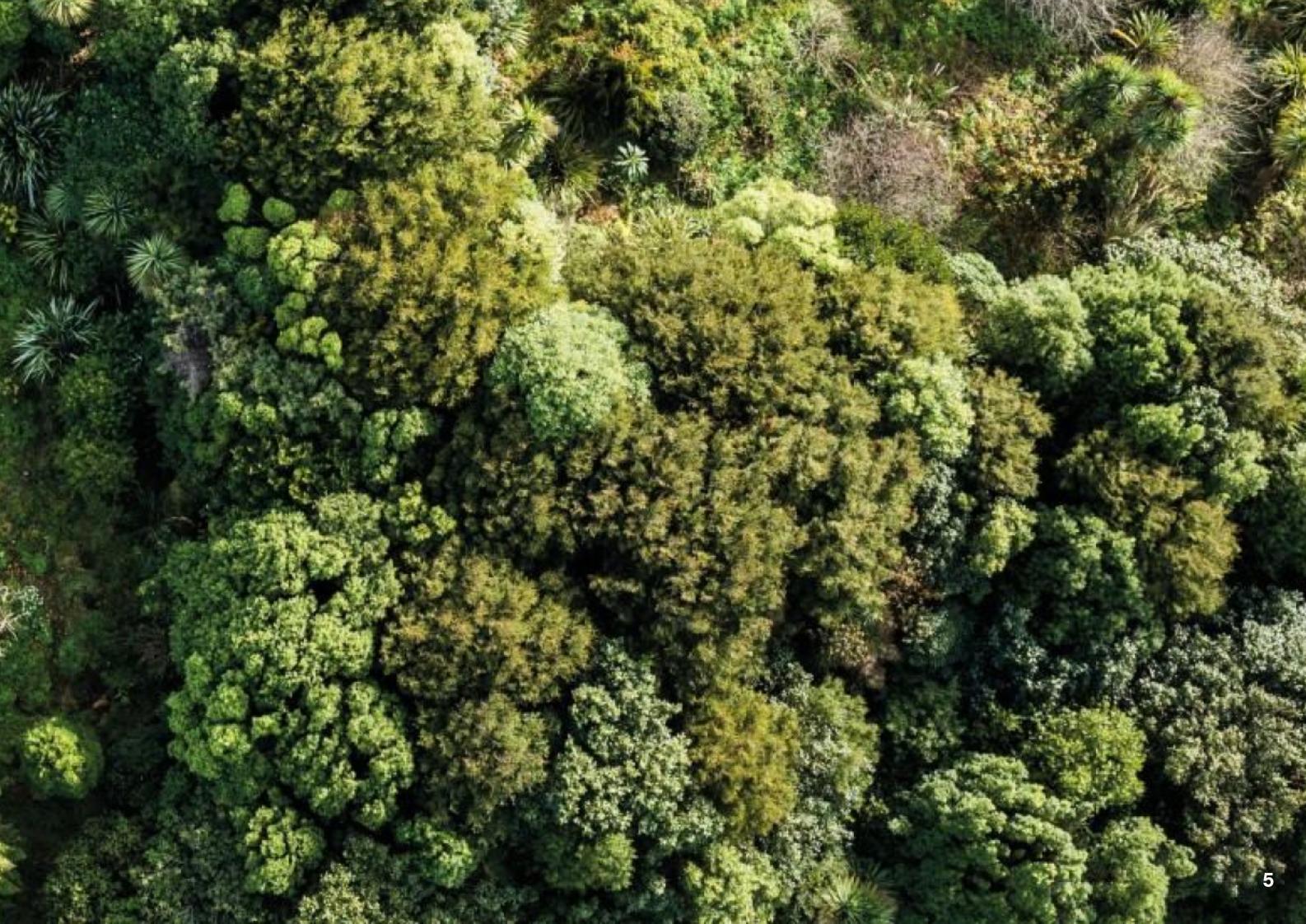
Cover image: Robert and Robyn Guyton’s deciduous forest garden, Riverton.
This article is based on the presentation by Gary Marshall at the 2025 NZILA conference, Heretaunga Hastings, 22-23 May, 2025.
In the first article, found here, I discussed our industrial food system and social change, and highlighted some of the ways these things fit together. In this second part, I will share some of the work that we have been doing at Aotearoa Permaculture Workshop (APW) and Resilio Studio to support the science, art and practice of forest gardening in Aotearoa.
Forest Gardening in Aotearoa
Forest gardening has been practised by indigenous people around the world for millennia. And while there is increasing interest in forest gardening, the available resources tend to be either too general or specific to locations and climates that are not necessarily relevant to us here in Aotearoa. A good example of this is revealed through a short internet search - type in the keywords “forest garden” or “food forest”. Look at any of the top ten videos of this search, and you will likely hear someone sharing how a forest has seven layers - ground cover, canopy, emergent layers, etc. Well, yes and no.
Yes, forests in tropical climates have seven, even nine layers; however, here in Aotearoa, our temperate, broadleaf conifer forests have five layers, and our beech forests have between two and four. If forest gardening is going to play a role in building a parallel food system here, we think there is value in exploring forest gardening that is better suited to the ecosystems of Aotearoa. Over the last decade, my colleagues and I at APW and Resilio Studio have been researching forest gardening to help fill this niche.
For the last 10,000 or so years and for much of her 65 million-year history as a collection of islands, Aotearoa has been and still could be a forested landscape. Because much of Aotearoa is naturally a forested landscape with a relatively mild climate, it is particularly well-suited to forest gardening.
A forest garden is a garden designed and tended with the layers and complexity of a forest in mind. While not as productive as commercially grown crops that focus on single yields, a forest garden offers similar benefits across a greater diversity of harvests - food, fibre, fuel and medicine - while regenerating ecosystems, providing multiple ecosystem functions, and building resilience. This is true of most places, particularly in areas of land less suitable to intensive cropping.
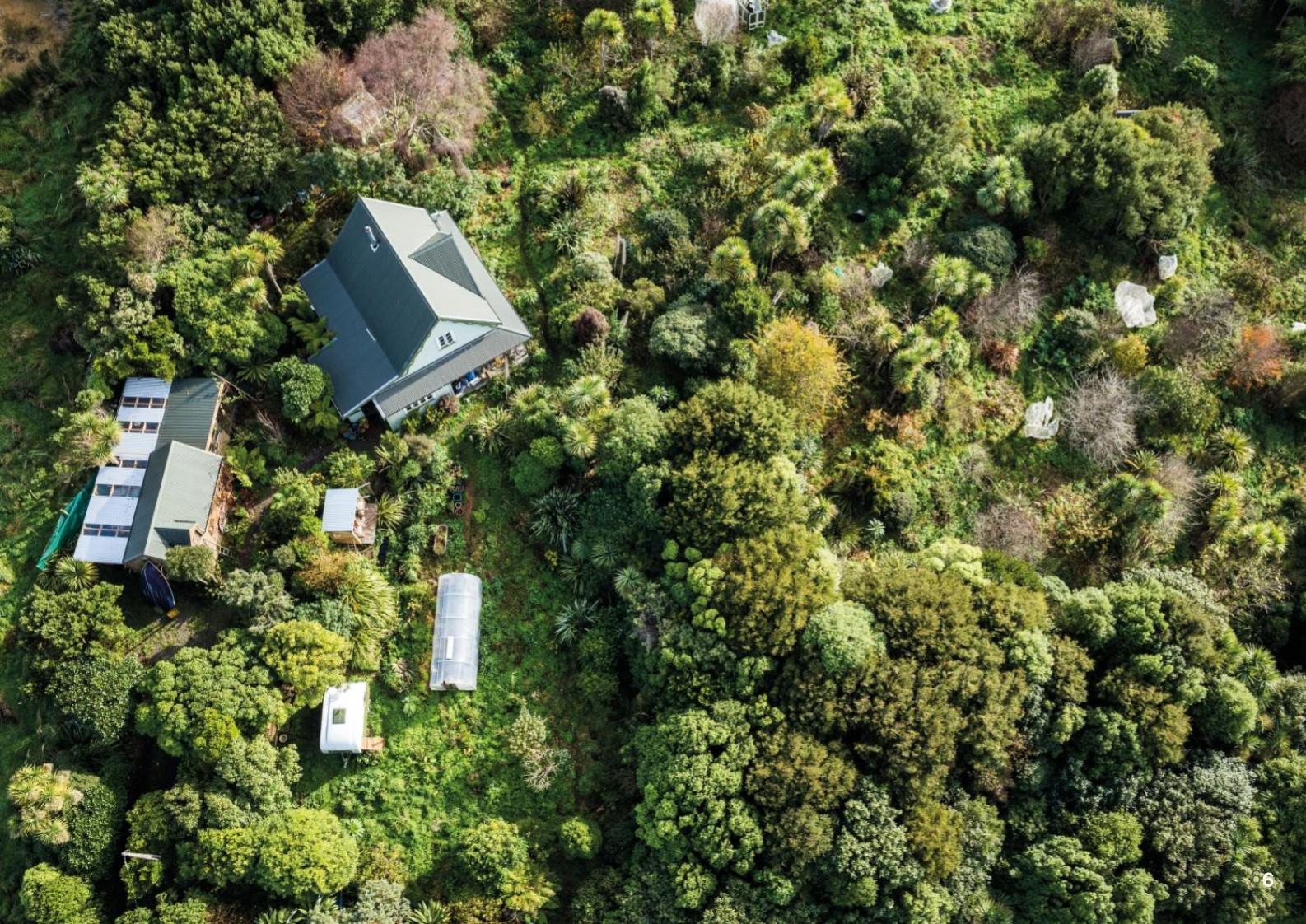
Robert and Robyn Guyton’s deciduous forest garden, Riverton.
When we think about a forest garden as a biodiverse, multi-layered orchard, it helps us to think about different types of forest gardens suited to different climates in the same way that broadleaf conifer forests or beech forests reflect underlying landscape patterns. In this sense, there are four broad types of forest gardens - tropical, subtropical, Mediterranean and deciduous, each responding to different climatic and geographic conditions.
Most places around the world are well suited to one or two types of forest garden - the cold winters and mild summers in the northern latitudes of the northern hemisphere support deciduous forest gardens but little else, while the warm summers, mild winters, and limited rainfall of the Mediterranean are well suited to, well Mediterranean forest gardens. Unlike many countries, Aotearoa can support three distinct types of forest gardens: subtropical, Mediterranean, and deciduous.
Subtropical Forest Gardens
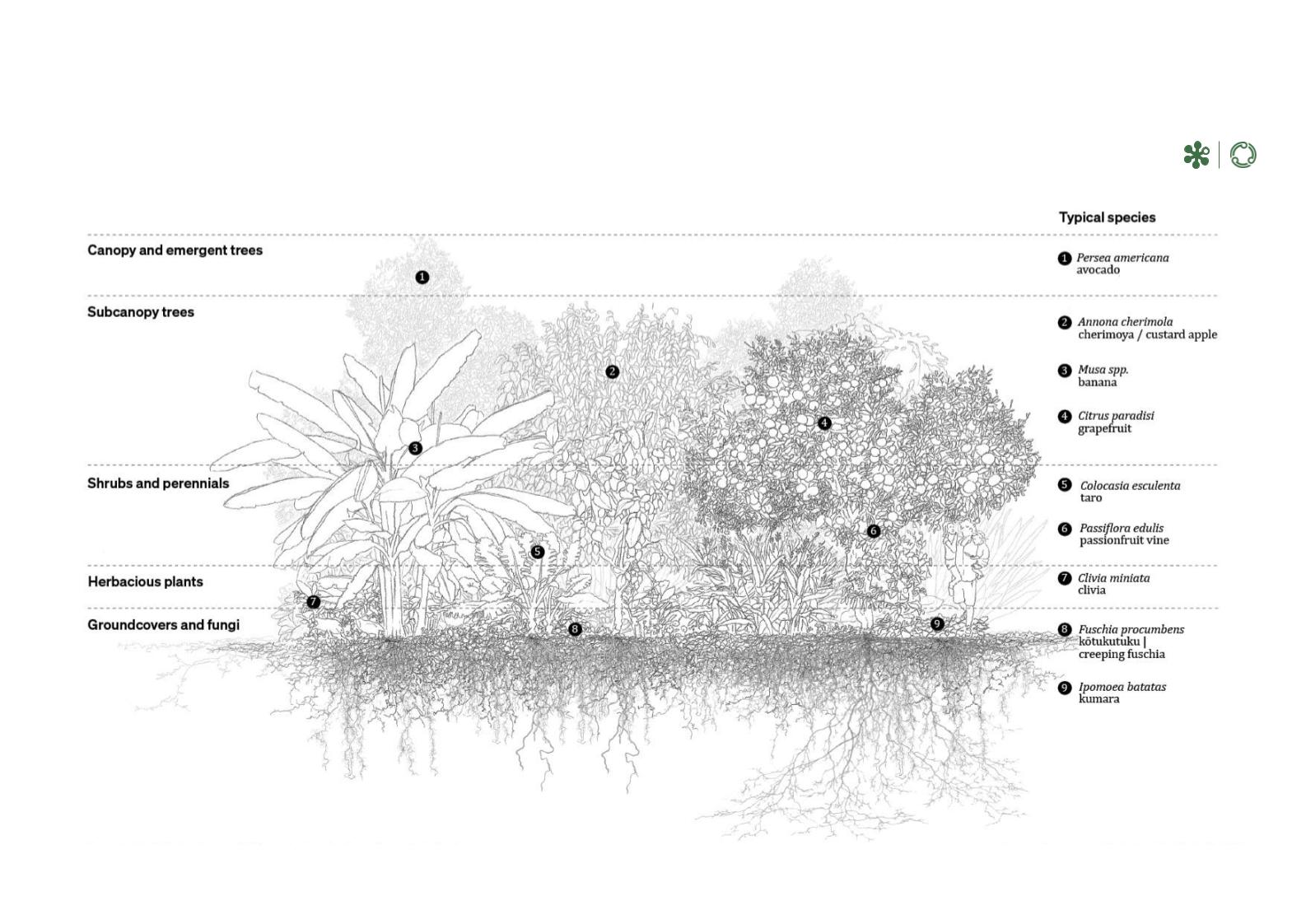
Forest Garden Guide for Aotearoa_Vol 1 by Aotearoa Permaculture Workshop and Resilio Studio.
The subtropical climate has warm, humid summers and cool, mild winters. Subtropical forests have dense canopies with five layers, similar to the broadleaf conifer forests of Aotearoa. Soils are typically rich and loamy. Species might include avocado and inga bean canopy trees; a sub-canopy layer of banana palms, papaya, and tamarillo; hibiscus shrub layers and ground covers of nertera.
In Aotearoa, areas suitable for subtropical forest gardening include Te Tai Tokerau/Northland; Tāmaki Makaurau/Auckland and microclimates throughout the Whakatū/Nelson rohe and Tauranga Moana/ Bay of Plenty.
Syntropic agroforestry is a form of forest gardening well suited to fast-growing tropical and subtropical climates and species that emphasises natural forest succession, utilising precise pruning and planting timelines to accelerate ecosystem regeneration.
Deciduous Forest Gardens
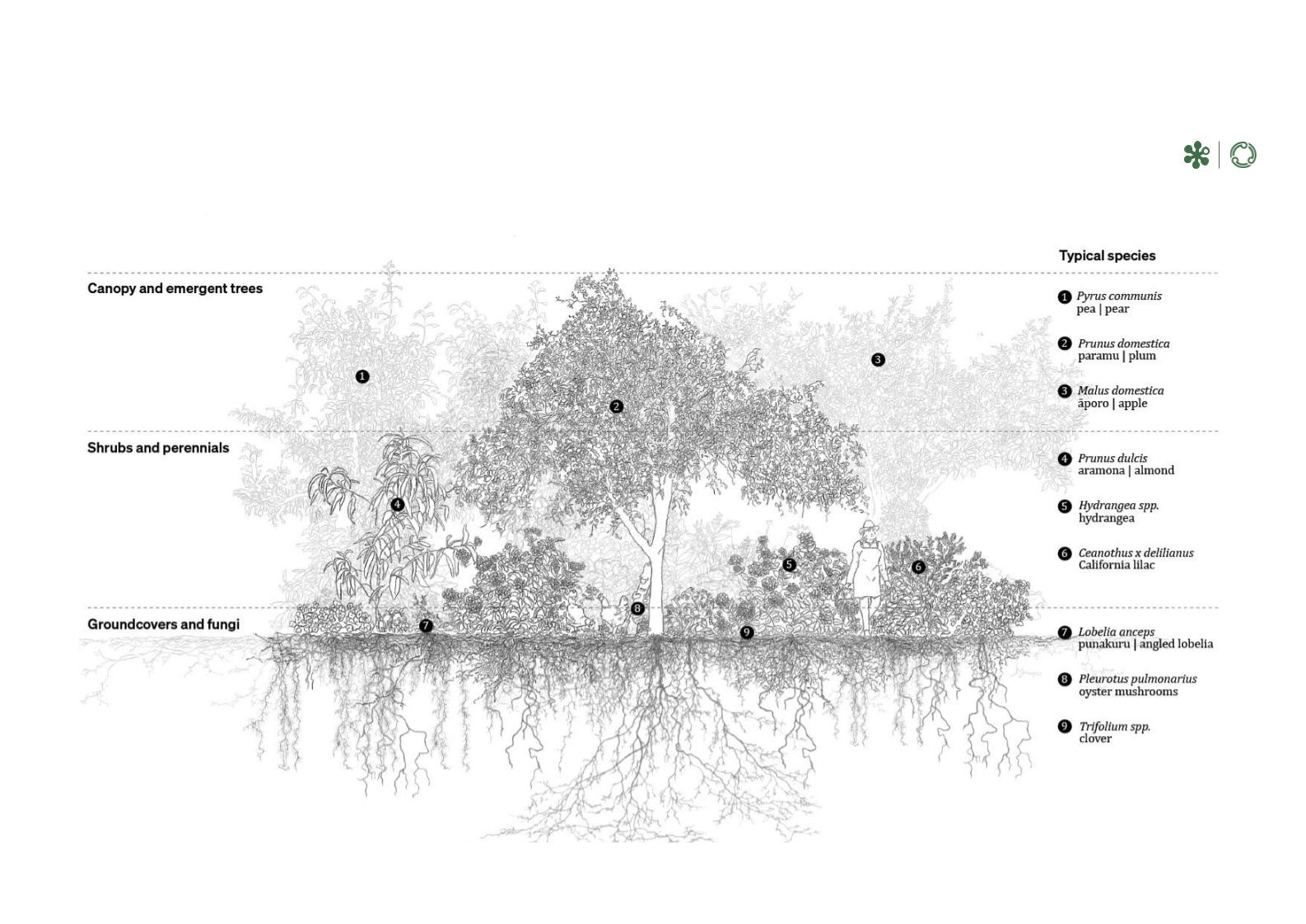
Forest Garden Guide for Aotearoa_Vol 1 by Aotearoa Permaculture Workshop and Resilio Studio.
The deciduous climate has varying temperatures with four distinct seasons. Deciduous forests have open canopies with 3 - 4 layers, similar to the beech forests of Aotearoa. Soils are typically fertile and hold nutrients during dormant seasons. Species could include emergent pear, plum, and persimmon canopy trees, blueberry and echinacea shrub layers, and chamomile and strawberry ground covers.
In Aotearoa, areas suitable for deciduous forest gardening include the Waikato basin, the Taranaki rohe, much of lower Te Ika-a-Māui / North Island, and food-growing areas of Te Wai Pounamu / South Island.
Mediterranean Forest Gardens
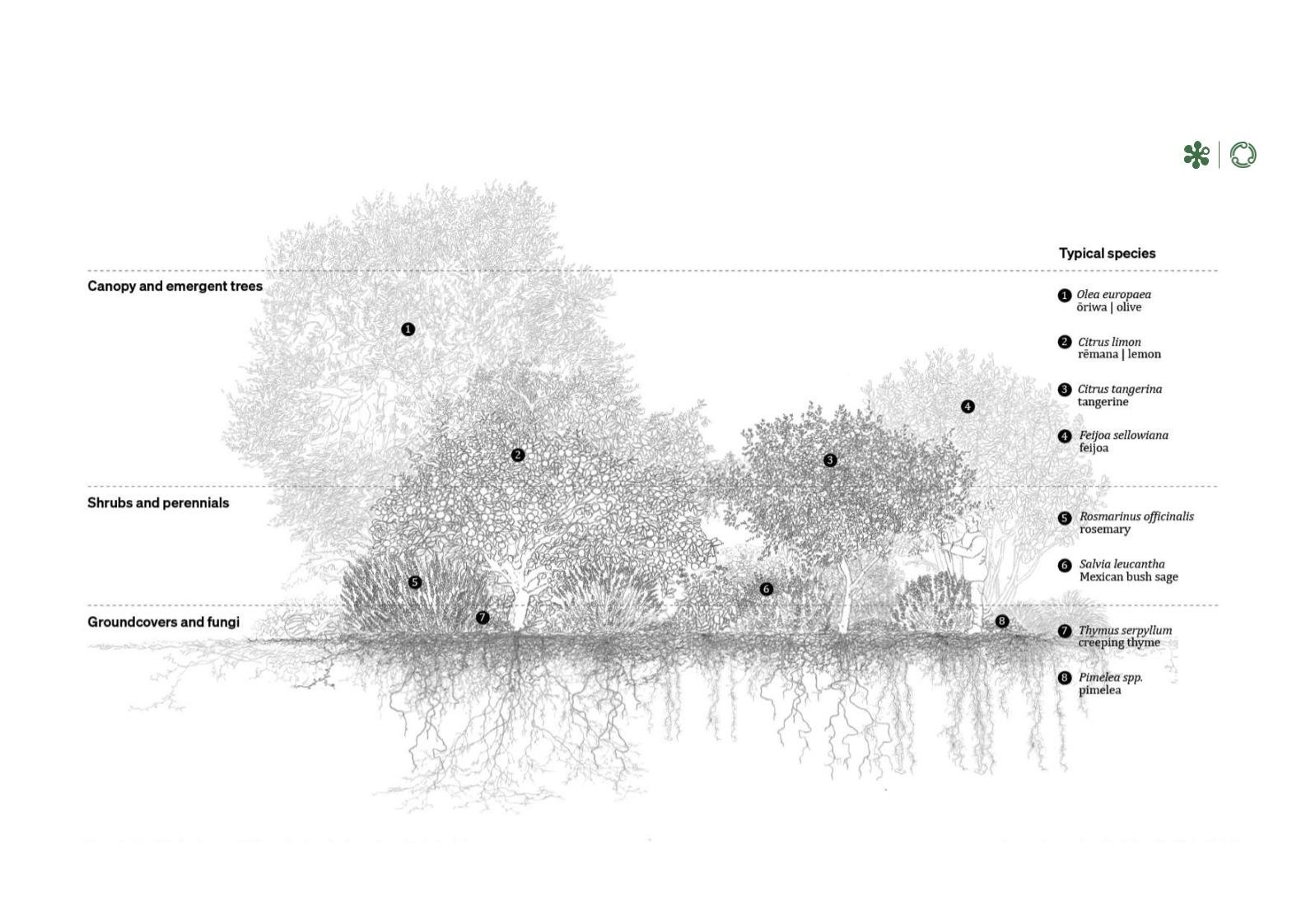
Forest Garden Guide for Aotearoa_Vol 1 by Aotearoa Permaculture Workshop and Resilio Studio.
The Mediterranean climate has hot, dry summers and cool, damp winters. The trees in Mediterranean forests are widely spaced and have open canopies with three layers. Trees require full sun and good air circulation to minimise fungal diseases. Soils are typically free-draining. Species might include olive, fig, and pomegranate canopy trees; rosemary, lavender, and sage shrub layers, with ground covers of thyme and oregano.
In Aotearoa, areas suitable for Mediterranean forest gardening include the east coast of Te Ika-a-Māui / North Island and Te Wai Pounamu / South Island. More broadly across Aotearoa, climate models suggest that we will experience warmer, drier climates in the coming decades and centuries, meaning that we can anticipate larger areas of Aotearoa being suited to Mediterranean forest gardens.
Forest Garden Guide for Aotearoa
For the last 15 years, we have been researching and practising forest gardening around the upper North Island. Based on this work and experience, we have developed a guide to provide practical advice on the science, art and practice of forest gardening in Aotearoa. We have done our best to make it accessible and replicable to anyone interested in forest gardening. We hope this will contribute to a diverse and growing community of forest gardeners who develop and refine ecologically responsive and regenerative food systems in Aotearoa. This is what David Holmgren (in 2025) has to say about it:
"The forest garden concept has been central to permaculture horticulture experimentation around the world over many decades. This design-focused guide distils lessons learnt and models for the next generation of forest gardens in Aotearoa."
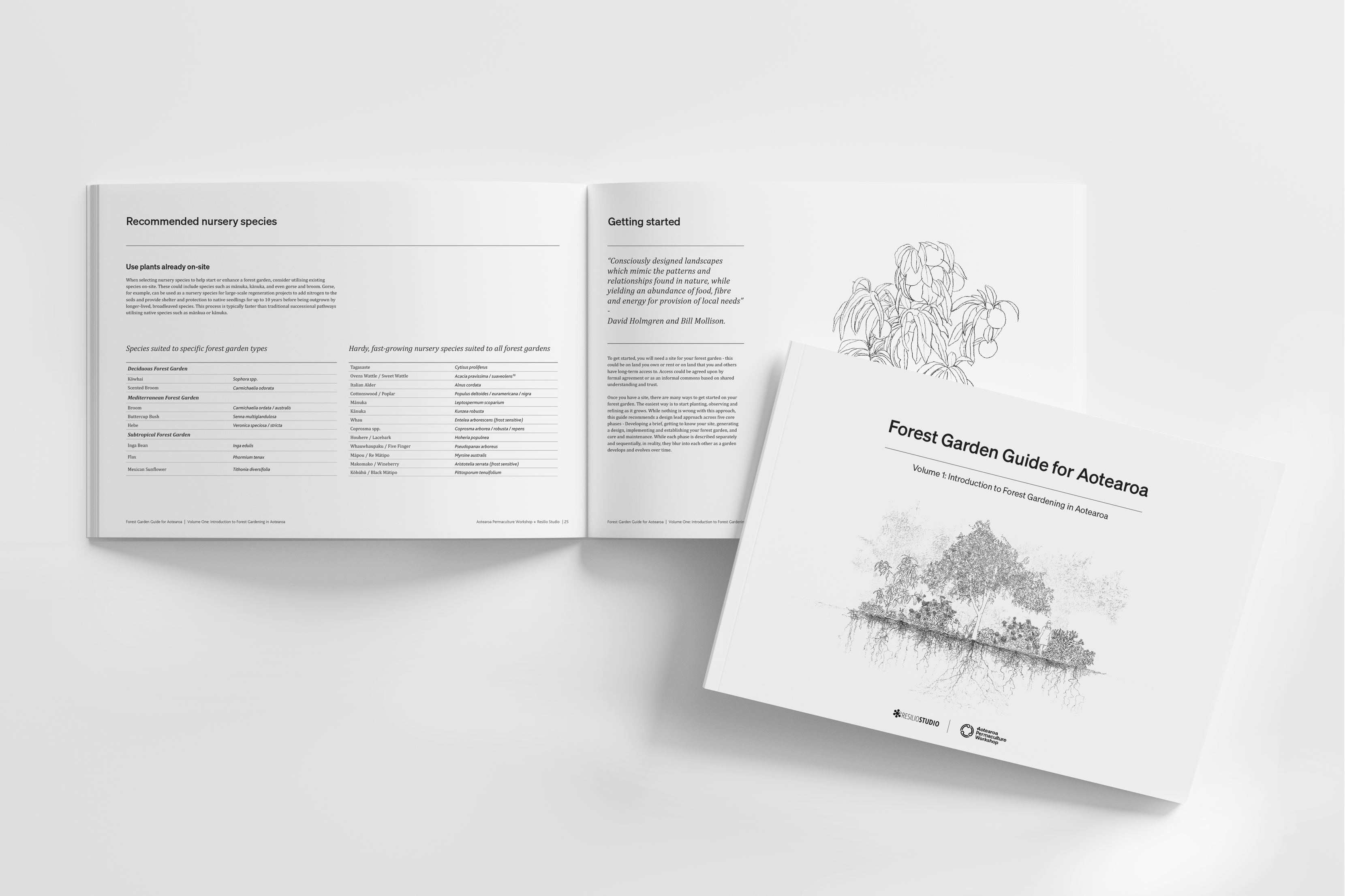
We have just released the first of four volumes that guide forest gardening in Aotearoa. Volume 1 - An Introduction to Forest Gardening in Aotearoa gives readers a general introduction to designing, establishing and maintaining forest gardens in Aotearoa. The following three volumes, which we will release in 2026, will provide plant lists for three different types of forest gardens suited to Aotearoa.
We will update these guides as we learn more and receive feedback from a network of Aotearoa-based forest gardeners who are testing and refining their practices through trial and error. If you have feedback or reflections on the usefulness of this guide and its contents, we would love to hear from you at gary@apw.org.nz.
To learn more about forest gardening in Aotearoa, access our free guide here.
For guidance and support in your forest garden design, contact us at Resilio Studio.
Happy forest gardening, ngā mihi, Gary, Resilio Studio and the APW team.